


National Geographic 1998 March
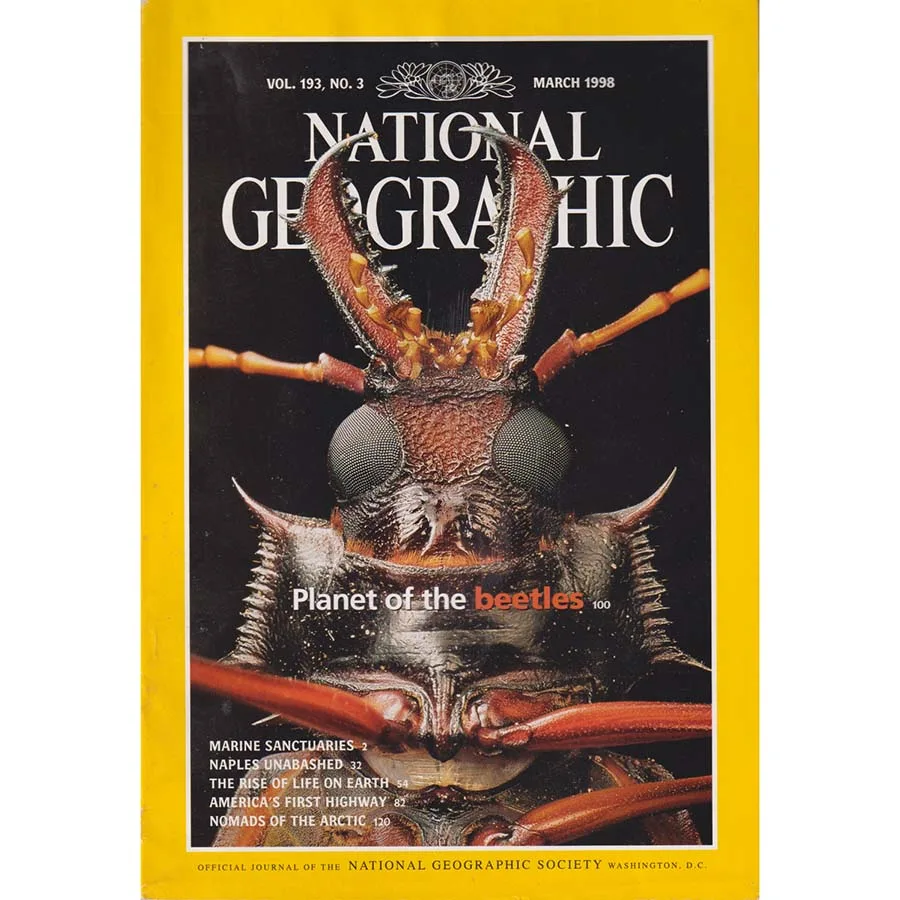
Publisher: National Geographic
Format: Paperback
ISBN: none
National Geographic, March 1998: the issue that looks you dead in the eyes with a beetle the size of your ambitions and says, “Yes, I am the main character.” If you’ve ever wondered what it would feel like to be judged by an insect with armour plating, antler-like mandibles, and the quiet confidence of something that’s been here longer than your entire family tree… congratulations. This magazine is basically that experience, shrink-wrapped in a yellow border.
The cover feature—“Planet of the beetles”—is classic Nat Geo bait: take the most overlooked lifeforms on Earth, blow them up to cinematic proportions, and suddenly you’re considering whether your mortgage is really worth it when beetles are out here doing heavy industry, waste management, forest engineering, and sheer evolutionary swagger without even asking for a LinkedIn endorsement. It’s humbling. It’s slightly unsettling. It’s also weirdly comforting to know that if the world ended tomorrow, the beetles would simply adjust their tiny hard hats and carry on.
Inside, March ’98 does that wonderfully chaotic National Geographic thing where it hops from one corner of the planet to another like a well-funded curiosity gremlin:
-
Marine Sanctuaries: a reminder that the ocean isn’t “a big wet void” but a living system that would quite like us to stop treating it like a universal bin. Think beauty, biology, and the faint sense you should apologise to a fish.
-
Naples Unabashed: Italy, but not the postcard version. This is Naples with the volume turned up—history, street life, grit, glamour, and the sort of energy that makes your orderly little to-do list look like a fragile suggestion.
-
The Rise of Life on Earth: the long, dramatic origin story where the protagonist is “life” and the plot twists include oxygen, extinctions, and the audacity of single-celled organisms deciding to become everything. It’s basically the ultimate “and then things got complicated” timeline.
-
America’s First Highway: proof that “infrastructure” can be thrilling if you add enough dust, ambition, and the steady march of people trying to get somewhere better. Roads: the original algorithm for movement.
-
Nomads of the Arctic: humans doing the opposite of “convenience culture,” living with skill, resilience, and a relationship to cold that makes your complaint about the office air-con feel deeply embarrassing.
The best part is the tonal whiplash, delivered with absolute sincerity. One minute you’re emotionally invested in a protected reef, the next you’re strolling through Naples, then you’re watching life crawl out of primeval soup, and then—BAM—an insect stares into your soul again. It’s like a world tour guided by a professor who refuses to admit they’re tired and keeps pulling “just one more fascinating thing” out of their bag.
Condition: Good, meaning it’s survived the late-90s intact—still full of glossy wonder, earnest captions, and the kind of photography that makes you whisper “how did they even get that shot?” out loud. Expect normal wear consistent with a magazine that has been handled by humans (a species famously not known for gentle page-turning).
Sold by Crappy Old Books, which feels poetically correct: this is premium curiosity with a slightly scruffy handshake. Perfect for collectors, dabblers, insect appreciators, and anyone who wants a single issue that can make you care about oceans, cities, evolution, roads, and the polar north—while a beetle quietly reminds you who really runs the planet.
Keep browsing: See more National Geographic books Other books by National Geographic
